
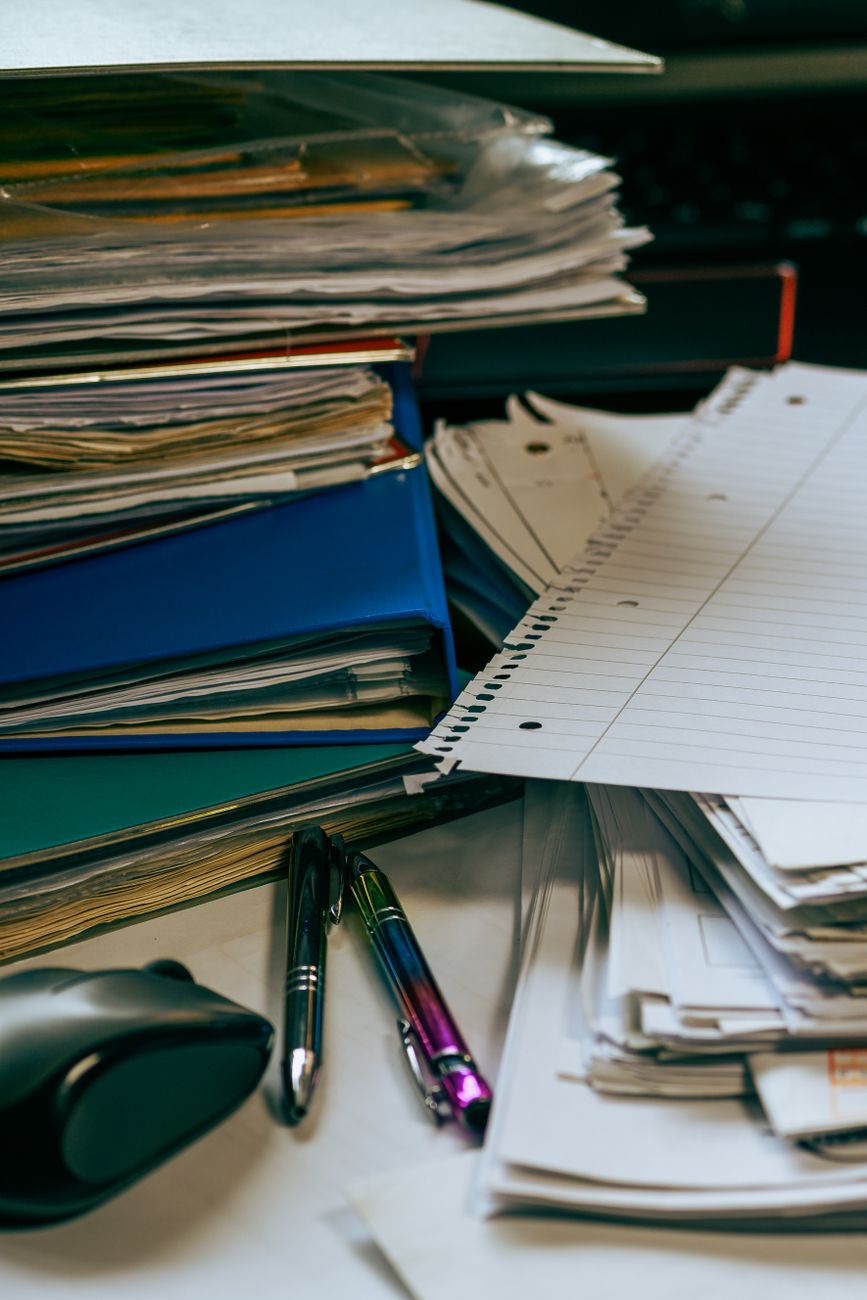
Household paperwork becomes frustrating when every envelope needs a new decision and every missing document starts a search. A bill lands beside the kettle, a repair receipt stays in a bag, and an important letter disappears beneath something you meant to read. Giving paper a simple home means creating a clear route from arrival to action to storage. You need places that are easy to use on an ordinary, busy day.
Choose where paper enters your home
Start with the spot where you naturally put the post or empty your bag. Place a tray, shallow basket, or upright file there. This becomes your incoming-paper home. It should be visible enough to remember but contained enough that loose sheets cannot spread across the room.
Use a container you already have while you work out what suits the space. Easy access matters more than matching stationery. If putting paper away requires opening a cupboard, moving a stack, and finding a lid, you are more likely to leave it on the nearest surface.
Bring household paper to this place when it arrives, including documents carried home from appointments or handed over at the door. Ask anyone sharing the home to use the same landing spot. You can keep personal correspondence separate, but agree on where shared bills and household notices belong.
Give incoming paper a quick first sort
The incoming tray is a temporary stop, not a permanent archive. When you open an envelope, decide what kind of attention its contents need. You do not have to complete every task immediately; you only need to direct the paper somewhere useful.
- Remove packaging and ordinary unwanted paper for recycling.
- Put documents that require a response into an action folder.
- Move useful reference documents into their subject folders.
- Set sensitive unwanted documents aside for secure disposal.
Check the contents before discarding an envelope. Keep it with the letter if the postmark, return address, or other information may matter. Avoid treating every official-looking sheet as something to save indefinitely. Instead, ask what you would use it for and whether you already have a complete, accessible copy.
If a document is unclear, put it in the action folder with a brief note about what you need to find out. A question such as “Does this need a reply?” gives you a starting point when you return to it.
Separate work to do from records to keep
An action folder holds paper connected to an unfinished task: a form to return, a bill to check, or a letter that needs a reply. Keep it beside the incoming tray so it is easy to reach. Filing an unfinished task among old records can make it disappear from your attention even when you know where it is.
Write the next action on a removable note or a separate task list. “Check the address and return the form” is more useful than “deal with letter.” If there is a deadline, put it in the calendar or reminder system you already consult. The folder holds the supporting paper; the reminder tells you when to act.
Some tasks remain open while you wait for another person. Mark these clearly with what you are waiting for and whom you contacted. Keep them apart within the action folder if that helps. Once the task is finished, move the document to reference storage or dispose of it if it no longer serves a purpose.
Build folders around how you would search
Choose broad folder names that match the questions you ask when looking for something. You might think “Where is the washing machine receipt?” rather than remember which month you bought it. A folder called “Appliances and repairs” can therefore be more helpful than a folder named after a month.
A practical starting set might include:
- Home and utilities, for service information and household correspondence.
- Appliances and repairs, for receipts, warranties, and maintenance records.
- Insurance, for policy documents and related correspondence.
- Health, for appointment paperwork and personal records you need to keep.
- Work and learning, for relevant employment or course documents.
- Important originals, for documents that need particular care.
These are starting points, not a required filing scheme. Split a folder when finding something inside it becomes awkward. Combine folders that remain almost empty. The useful test is whether you and anyone who needs access would know where to look without an explanation.
Avoid a general “miscellaneous” folder if possible. It tends to collect papers whose purpose has not been decided. When something does not fit, ask what household activity it supports. Give it a clear home, or keep it in the action folder until you understand why it matters.
Make each saved document easier to use
Keep related pages together, especially when a letter refers to an attachment. Leave enough context to understand the record later. A receipt with an unclear description may benefit from a note identifying the appliance or repair, written on a separate sheet if you want to preserve the original.
For a continuing issue, keep the relevant correspondence together rather than scattering it across subject folders. A temporary folder for an unresolved repair can hold the estimate, messages, and work record. When the issue is settled, place that group in its lasting home.
Store important originals somewhere protected from everyday spills and casual handling. Consider who genuinely needs access, particularly for documents containing personal information. A visible incoming tray is convenient for sorting; it is not suitable storage for every sensitive record.
Keep digital copies connected to the same system
If you scan documents, use folder names that resemble your paper categories. Give each file a name that tells you what it contains, such as the provider, document type, and relevant date. Open the saved file to check that every page is present, readable, and facing the right way.
Scanning is useful when it makes a document easier to retrieve, but it also creates another place to maintain. Decide where the dependable copy lives and how it is backed up. Avoid leaving the only useful scan in a temporary download folder or a message thread you may struggle to find.
Do not assume a scan always replaces an original. Before discarding a document that may be needed for an official purpose, check the requirements of the organisation involved. Keep uncertain originals together while you clarify their purpose, rather than making an irreversible decision during a quick tidy.
Return to the system before it overflows
Choose a familiar household moment for a short paperwork session, perhaps when you check your upcoming commitments. Empty the incoming tray, review the action folder, and file completed items. If you share responsibility, agree who handles each task so a document is not left waiting because everyone assumes someone else will respond.
Use the same session to notice friction. An overflowing folder may need a clearer division. A pile beside the tray may mean the tray is awkward to reach. Adjust the physical setup before adding more rules. The routine should reduce the effort of managing paper.
Review stored records occasionally, especially after a household change or when replacing an appliance or service. Retention needs vary by document and circumstance, so check relevant requirements before disposing of records you may still need. Handle unwanted sensitive papers through a suitable secure-disposal method.
If paperwork has already spread around your home, gather the loose papers into the incoming area and begin with anything that appears urgent. You can sort older material gradually while giving new arrivals a clear route. The system is working when you can see what needs attention, put finished papers away easily, and find the document you need without searching through unrelated piles.